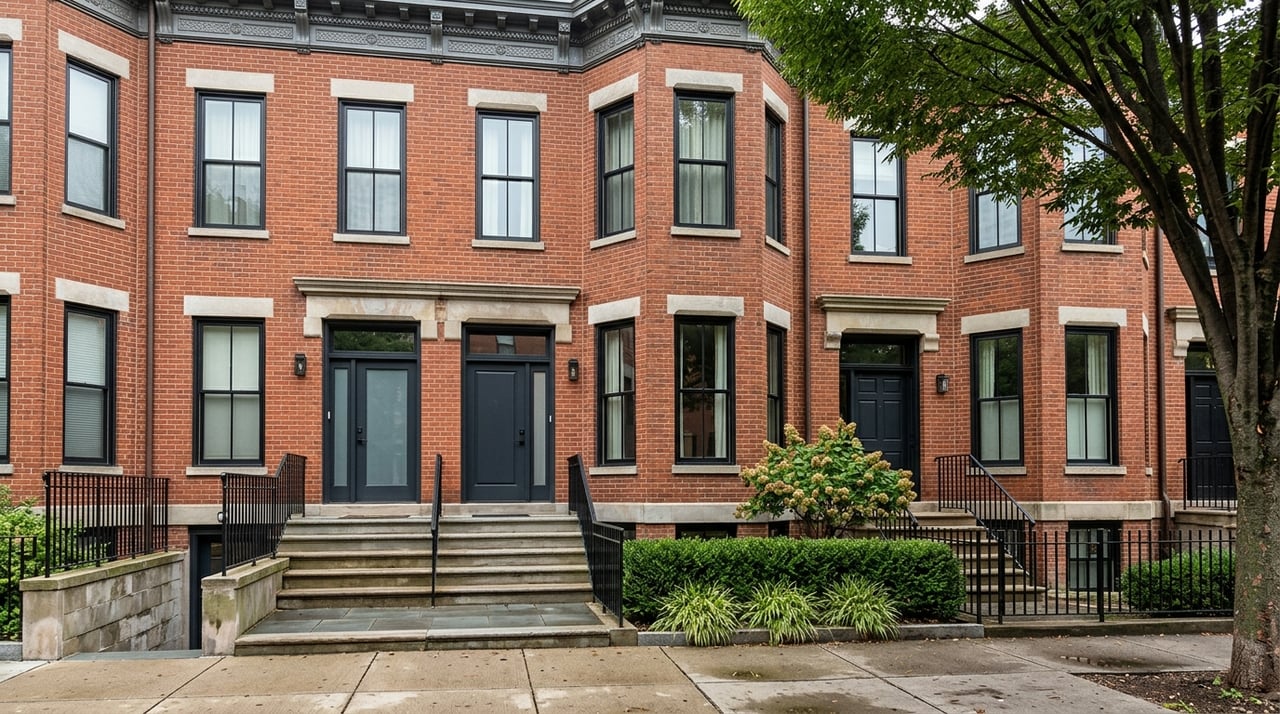
Queens Small Multifamily Investment Strategies
If you want a Queens property that can help offset your housing costs or produce long-term income, a small multifamily building deserves a serious look. For many buyers, 2- to 4-family homes sit in a sweet spot between owner-occupied housing and investment property, but the numbers only work when you understand local rents, financing limits, and operating risks. This guide breaks down the basics of investing in small multifamily properties in Queens so you can evaluate deals with more confidence. Let’s dive in.
Queens remains a practical market for small multifamily investing because demand for rental housing is deep and varied. According to U.S. Census QuickFacts for Queens County, the borough had a 44.9% owner-occupied housing rate, a median gross rent of $1,956, and an average household size of 2.72 in the 2020-2024 period.
That local demand story is reinforced by the NYU Furman Center’s Queens profile, which reported a 3.1% rental vacancy rate in 2023. Furman also found a borough-wide median rent of $1,950 and a recent-mover median rent of $2,230, which suggests that unit turnover and condition can have a real impact on income.
Queens also has a meaningful base of small-building activity. Furman recorded 2,621 sales of 2-4 family buildings in 2024, showing that this is not a niche corner of the market. If you are looking for a property type with a steady local buyer pool and ongoing tenant demand, small multifamily remains relevant here.
For many buyers, the biggest benefit is flexibility. You may choose to live in one unit and rent the others, or you may buy strictly as an income-producing asset depending on the property and your financing path.
This property type can also offer a more manageable entry point than larger apartment buildings. You are often dealing with fewer units, a simpler rent roll, and a scale that is easier to oversee while still giving you multiple income streams.
In Queens specifically, family-sized units matter. Furman reports that 27.6% of households had children under 18 in 2023, and its rent-distribution data shows strong representation for two- and three-bedroom homes in the $2,000-$2,500 gross-rent ranges during 2019-2023. That supports continued demand for practical, larger rental layouts.
Cap rates in Queens are best treated as a starting point, not a shortcut to value. There is no single official public cap-rate index for small multifamily across the borough, so buyers often look at recent listing and sale examples to build a working range.
Public examples cited in market research show cap rates around 5.7% for a Queens listing at 47-16 45th Street, 5.9% for 25-04 44th Street in Astoria, 6.0% for a fully leased Astoria multifamily asset, 6.8% for a Queens rent-stabilized portfolio, and 7.84% for a six-unit rent-stabilized Ridgewood building, based on public examples referenced by Alpha Realty.
A practical underwriting takeaway is that stabilized free-market or lightly mixed assets may trade in roughly the mid-5s to mid-6s, while more operationally complex or rent-stabilized properties may show higher caps. That does not mean a higher cap is automatically the better deal. It often means the buyer is taking on more risk, more management complexity, or more limits on rent growth.
In Queens, the spread between current rents and potential rents can change how a deal looks on paper. Furman’s data showing a median rent of $1,950 versus a recent-mover median of $2,230 is important because it highlights how turnover can affect revenue.
A property with below-market in-place rents may appear weak if you only look at current income. On the other hand, a similar building with renovated units or more regular turnover may support a stronger valuation because its income profile is closer to current market conditions.
That is why you should avoid relying on a simple cap-rate headline. Review the actual rent roll, lease terms, unit condition, and turnover history before you decide what the property is really worth.
Financing is one of the biggest reasons small multifamily attracts owner-occupants. According to HUD guidance on FHA-insured mortgages, FHA loans can be used for 2- to 4-unit properties, and the 3.5% minimum required investment may come from borrower funds, gifts, second mortgages, or down-payment assistance grants.
Freddie Mac eligibility guidance referenced by HUD also supports 2- to 4-unit owner-occupied primary residences. For buyers who plan to live in one unit and collect rent from the others, that can create a path that is more accessible than many people expect.
Queens is also a high-cost county for conforming loans. The FHFA 2026 county loan-limit list shows Queens County limits of $1,209,750 for one-unit properties, $1,548,975 for two-unit properties, $1,872,225 for three-unit properties, and $2,326,875 for four-unit properties.
That matters because many Queens 2- to 4-family purchases may still fit within agency financing, but some neighborhoods and renovated properties can move into jumbo territory quickly. Before you make an offer, confirm whether your deal fits conforming, jumbo, or portfolio financing, especially if your strategy depends on owner-occupancy and projected rental income.
Rent regulation is one of the first issues to review during due diligence. According to New York State Homes and Community Renewal, rent stabilization in New York City generally applies to many buildings with six or more units built between February 1, 1947 and December 31, 1973, along with certain other categories tied to timing or tax benefits.
As a practical rule, many Queens 2- to 4-family buildings are market-rate, but you should not assume that is always the case. Exceptions can exist, and identifying them early can protect your underwriting.
If a property is rent-stabilized, lease increases are limited by the city’s rules. The NYC Rent Guidelines Board adopted a 3% increase for one-year leases and a 4.5% increase for two-year leases for leases commencing from October 1, 2025 through September 30, 2026. For a stabilized asset, that makes expense control and realistic revenue planning even more important.
Registration is a separate issue from rent regulation, and buyers sometimes overlook it. The NYC Department of Housing Preservation and Development requires annual property registration for all residential buildings with three or more units and for one- to two-unit dwellings when neither the owner nor immediate family lives there. The deadline is September 1.
For rent-stabilized buildings, HCR also requires annual rent registration between April 1 and July 31. Missing these obligations can create unnecessary problems, so they should be part of your document review before and after closing.
Queens buyers should also pay attention to maintenance risk. Furman reports 89.0 serious housing code violations per 1,000 privately owned rental units in 2024 and 302.2 total housing code violations per 1,000 privately owned rental units. That is a strong reminder to budget for inspections, repairs, and reserves rather than assuming a small building will be simple to operate.
Before you commit to a small multifamily purchase in Queens, focus on the items that most directly affect income and closing risk.
This kind of diligence helps you move from a listing impression to a real investment decision. It also helps you avoid overpaying for income that may not be achievable right away.
Queens remains active enough to reward prepared buyers. According to Ariel Property Advisors’ Queens mid-year 2025 report, the borough recorded $463.3 million in multifamily dollar volume across 135 transactions in the first half of 2025, and buildings with fewer than six units accounted for nearly 60% of multifamily transactions and 39% of dollar volume.
That tells you two things. First, there is real liquidity in the segment. Second, this remains a highly local market where block-by-block differences, building condition, and tenant profile can shape value more than broad borough averages.
If you want a property that can combine housing utility with income potential, Queens small multifamily can be a strong fit. The opportunity is supported by rental demand, a steady transaction base, and financing options that can work for owner-occupants as well as investors.
At the same time, these deals reward disciplined analysis. The best purchase is not always the one with the highest advertised cap rate. It is the one where rents, financing, condition, and compliance all line up in a way that supports your goals.
If you are considering a 2- to 4-family property in Queens and want a practical, numbers-driven strategy, Darren Desrameaux can help you evaluate opportunities, navigate the process efficiently, and move toward a confident closing.
Stay up to date on the latest real estate trends.


Looking for a passionate agent or a new opportunity? Let’s work together. Whether you're a client or a future agent—Darren is ready to help you grow.